
Tenant or Landlord? How It Usually Works
A blocked drain in a rented Dubai apartment often leads to a who-pays question between tenant and landlord. There is no single rule that covers every case, but the answer generally turns on two things, what caused the blockage, and what the tenancy contract says. This guide explains the usual principles so you can work out where you stand, though it is general information, not legal advice.

When it is usually the landlord's cost
Blockages that come from normal wear and tear, the building's shared drainage, or an underlying fault, a collapsed pipe, root intrusion, scale in ageing communal lines, are typically the landlord's responsibility, because they relate to the condition of the property rather than how the tenant used it. A blockage in a shared stack affecting several apartments is usually a building matter too.
When it is usually the tenant's cost
A blockage caused by misuse, flushing wipes or sanitary products, pouring fat down the sink, or putting food waste down a drain without a strainer, is typically the tenant's responsibility, because it results from how the drain was used rather than a fault in the property. The same applies to anything clearly introduced by the occupant.

What the tenancy contract says
The tenancy contract is the final word. Many Dubai contracts set a maintenance threshold, where the tenant covers minor repairs up to a stated amount and the landlord covers larger ones, and some specify who handles drainage and plumbing. Read your contract first, because its terms override the general principles above.
How to avoid a dispute
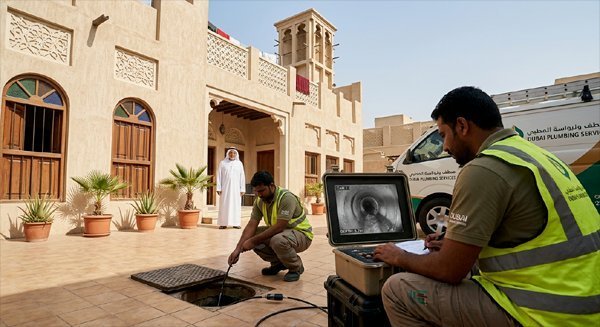
When a blockage happens, a camera survey that shows the cause, misuse versus a building fault, settles most disputes fairly, because it replaces opinion with evidence. Report the problem to the landlord or agent promptly, keep it in writing, and agree who is instructing the drainage company before the work, so the cost is clear from the start.